TVEyes Warping Fair Use Principle

Once again the Electronic Frontier Foundation has taken up the cause of industry in the guise of public interest, principally with the ultimate goal of distorting fair use doctrine beyond its intended purpose.  I am speaking about the case of FoxNews v TVEyes, which as Terry Hart points out in this post on Copyhype, re-treads some familiar ground regarding the copyright interests of news producing entities and the fair use claims of news monitoring services.  I recommend Hart’s blog for more in-depth historical context; but suffice to say that in the early 1990s, bills proposed by Senator Orin Hatch that would have amended copyright law to add news monitoring to the list of fair use purposes never made much progress. But, as Hart writes, “…the lack of legislation did not jeopardize the broadcast news monitoring industry. Nevertheless, little has changed in the discussion of fair use and news monitoring from the early 90s to the current litigation involving Fox News and TVEyes.”

Last fall, a federal judged ruled in this case that copying “broadcast content for indexing and clipping services to its subscribers constitutes fair use.”  And this July, oral arguments will be heard as to whether or not other services (like subscribers downloading, storing, and emailing clips) might also be judged fair.  The EFF, along with the Technology Law & Policy Clinic at NYU School of Law, has filed an amicus brief on behalf of TVEyes, while several leading news organizations have filed a brief on behalf of Fox.

To be clear, plenty has changed technologically in the news monitoring world, but Terry Hart’s point above is that the fair use argument being made today in favor of TVEyes is fundamentally the same as the arguments that failed in Congress twenty years ago — namely that there is a public and First Amendment-serving purpose to news monitoring that should qualify the enterprise as a fair use of copyrighted material.  And be it far from me to second guess a federal judge, but it seems that technological changes have only weakened this argument, not strengthened it, particularly when we look at the specific business model of TVEyes itself.

News monitoring services have been around since before television, first in the form of clipping services for print, and later as video systems monitoring broadcasts of “hard news” that was captured and stored on tape. This enabled customers to order a specific broadcast clip for educational, documentary, reporting, and other communications and investigative purposes.  We used these services in the 1990s during my corporate communications days. You paid a service a small fee to do a search and then received a VHS tape with the clip(s) you needed.  Today looks very different.

Presently, TVEyes copies, stores, and indexes round-the-clock broadcasts from 1,400 channels, and this includes programming that exceeds traditional models for “hard news” monitoring, capturing entertainment programs like magazine-format shows and documentaries.  Moreover, TVEyes is a fairly elite, B2B service; and it seems to me that fair use exceptions in the name of the public’s right to information ought to be limited to those uses that actually serve the public. But you and I do not use TVEyes, and we never will because a subscription costs $500/month.  So, as a business, TVEyes is not even a consumer-focused service, but an industry-focused service used by professionals who need to be ahead of the proverbial curve when it comes to breaking and overlapping news stories.  Such professionals include news organizations like the Associated Press, major corporations, government agencies and NGOs, and of course high-level investors who are skilled in the dark arts of predicting how a traffic jam in Malaysia might affect their position in shoe laces or something.

Clearly, this $6,000/year service is not for the general citizenry that has a right to be informed. In fact, it’s interesting that one argument being made today on behalf of TVEyes — as it was twenty years ago for news monitoring in general — is that there is “so much information out there”, that these services are invaluable.  And they are invaluable for the types of clients that need and can afford them. Meanwhile, the public-serving aspect of the fair use argument here seems to overlook this free technology we all have called the search engine.  Yes, there is more information produced more rapidly by more sources than ever before; but the average citizen also has more free tools to search, index, and access that information than ever before.  Isn’t that what Google congratulates itself for doing at every opportunity?  And setting aside the chicken-and-egg quality of these phenomena, the bottom line is that you and I can search news items all day long on just about any subject we can imagine, which has nothing to do with the high-priced and  specialized service provided by TVEyes.  The logic being applied is akin to saying that because the public has a right to know what happens in the financial markets, Reuters should not have to honor licensing deals for any of the content it aggregates to its elite Reuters Insider service that it sells at a premium to investment professionals.

There is absolutely nothing wrong with TVEyes. It’s a sound business and clearly provides a service that many companies and institutions consider well worth the subscription fee.  But as a for-profit entity providing a high-level, B2B service for institutional clients, it should not be allowed to profit from the use of assets produced by Fox or any other entity without paying reasonable licensing fees.  More importantly, it is dismaying to see fair use doctrine distorted on the basis that the general public is in any way served in this case. It moves the needle of legal precedent closer to the Internet and tech industry goal of monetizing the totality of works without paying the individuals or entities who produce them.  This neither serves any beneficial social practice nor any larger ideological principle.  It’s just an old-fashioned land grab and a big middle finger to the evicted. Fair Use is not what we mean when we say “FU.”

The Comic Strip as Model in the Digital Age

I just watched a fun little documentary film called Stripped (2014) made by David Kellett and Frederick Schroeder about comic strip creators. The film features interviews with veteran artists whose careers were born in the syndicated market as well as contemporary cartoonists whose work never graced a newspaper but instead found an audience in cyberspace. Every artist interviewed generally seemed to agree (editing notwithstanding) that the digital revolution resulted in an explosion of fresh, bold creative work in the medium and even provided a path for both new and established artists to make some kind of living in response to the shrinking newspaper market. Although Greg Evans, creator of Luan, does say that the Web is “pennies to the syndicate’s dollars,” several voices in the film did echo most, if not all, of the major talking points that critics like me tend to ascribe solely to those “tech-utopians” we like to remind our readers are not creators themselves.

These comic strip artists talked about adaptation, new models, new revenue streams, P2P relationships, the whole shebang. And I admit that I haven’t thought about comic strips in years because it’s been that long since I last spread a Sunday Times across the dining table. (Plus, I’m not really over the demise of Bloom County.) But having watched this film, it makes a certain amount of sense that the comic strip might (and I mean might) fare better in the digital age than other media. Or to look at it another way, what can work well for comic strips is instructive with regard to what does not work for other media, including of course comic books and graphic novels, which are different animals altogether.

As I say, I hadn’t thought much about this medium in this context, but several qualities unique to the comic strip do seem well suited by the new-model mantras of our times. In fact, the first image that popped into my head was one of those spreadsheets used to compare and contrast products or services. While there are always exceptions, if we’re going to consider these columns honestly in a way that reflects general rules, this is how it might look:

Comics Comparison

Each of the media listed might theoretically receive a check in every box, but I think it’s notable that comic strips seem to run the table, at least from a casual observation. Stripped also highlights a tradition of adaptation among these artists, citing the interesting fact that  the comic strip as a medium was the result of a class of talented book engravers put out of work by the invention of photography. And though the digital revolution may require some adapting by the contemporary comic strip creator, it does seem less like the kind of radical and unsustainable metamorphosis our new-age gurus presume to demand of creators in other media.

Comic strips are serial in nature, traditionally change daily, and are short-form experiences, which are all attractive qualities to a Web-based audience one hopes to draw consistently to a single site. Comics are also typically produced by a single creator who almost never relies on skilled outside labor to complete the work. And because comics create unique, iconic images, they are natural foundations for potential merchandise opportunities that can become primary rather than ancillary sources of revenue. Fan interaction is, of course, possible with any medium, but based on what I gleaned from the documentary, I got the sense of a natural symbiosis between creating a daily dose of humor or poignancy and regular interaction with loyal readers.

Overall, the qualities of the comic strip that seem to complement the opportunities of the digital age also appear to make them resistant to the threat of the digital age — piracy. And I imagine comics could be relatively piracy resistant, inasmuch as there is no inherent reason a fan won’t go to an official site to see the day’s strip rather than an unlicensed site, when both options are free and equally accessible. Nevertheless, some “fans” still fail to honor artist’s requests to not repost works without permission; and predatory site owners do scrape official comics hosts just as they do with photographs, lyrics, or just about any other asset they can use to siphon web traffic that a creator has legitimately earned for herself.

This is relevant because so many of the new-model theories presuming to tell creators how they should produce and distribute their works are repeated either as justifications for piracy or as proposed workarounds to render piracy irrelevant. Yet, we continue to see that even as low-cost or free alternatives for accessing media are employed, either outright pirate sites or semi-legal predatory sites continue to hijack valuable traffic away from producers. Meanwhile, even if the comic strip artist does prove to be one of the best poised to diversify and take advantage of the digital revolution, the piracy apologists and “copyright is dead” crowd remain eager to cut off alternative revenue sources, like merchandising, which would be meaningless without a legal framework for licensing.

No question the comic strip is an interesting medium to watch, but there are a lot of assumptions floating around out there that what might work for one medium or creator will work for all others, and this simply isn’t the case.

In praise of Elizabeth Wurtzel and “Creatocracy”

“What would the world be without America? It would be a dull and dinky planet indeed.”
– Elizabeth Wurtzel –

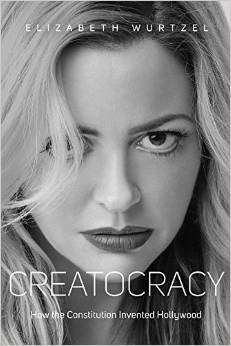
In honor of the 225th Anniversary of the first copyright act of the United States (May 31, 1790), I’d like to recommend a little book that neatly offers both a primer and a rationale for intellectual property in the United States. Creatocracy:  How the Constitution Invented Hollywood, by author and attorney Elizabeth Wurtzel is an unabashed, patriotic affirmation of the Progress Clause, reminding us that its inclusion in our Constitution can be explained by the same reason we have the United States at all:  because it seemed like a good idea at the time.

Unknown
Photo by Jason Myers

“There’s no particular reason that the Constitution, which otherwise contains few frills, should bother to make mention of something as luxurious to a nascent nation as intellectual property,” writes Wurtzel.  “And yet, there it is. As such it made America. Because of intellectual property, we live in a democracy of ideas and not a plutocracy of provenance.”

In just about ten thousand or so words, Wurzel flaunts American exceptionalism in both creative and practical inventions with the kind of energy in her writing that Kerouac gave to his love of jazz.   She gets in your face and tells you unequivocally that America is the coolest country in the world and that it has the almost incidental establishment of intellectual property law to thank for that coolness.  She reminds us that implicit in the Progress Clause is the same contagious, unwarranted optimism that created America in the first place. Drawing upon the fact that the nation itself is an improbable, even preposterous, invention, she cites the historical irony that no revolution of such magnitude had ever been fought, let alone won, by a people who had it so good. So, of course that same restlessness would eventually land men on the moon (and bring a car!), invent Rock-n-Roll and the Internet, build the largest military force in the world, and make a motion picture that cost a gazillion dollars just to produce a mediocre melodrama tacked onto an epic recreation of the epic sinking of the Titanic.

In fact, Wurtzel’s example of extolling the scope and audacity of James Cameron’s blockbuster is a pretty good metaphor for why I choose to defend copyright.  Sure, I criticized that film for all the subtle moments of pathos the script forgoes in favor of dime-novel sentimentality. And I have certainly never been a teenage girl who would return to the theater a dozen times to watch Leo sink into the Atlantic. But I agree with Wurtzel that we have reason to celebrate the gall that made that over-hyped, over-budgeted movie because it could have been a disaster, but it worked. And for better or worse, that has been the American story over and over again.

Likewise, it really is kinda cool that the Framers almost haphazardly established the basis for intellectual property while cobbling together a new nation populated by semi-literate and generally unwashed farmers. “… it was a supreme leap of of faith to believe that there would ever be culture in this country …,” writes Wurtzel. And although it is necessary and relevant that we critique law as we might critique Titanic, when that criticism lapses into futile cynicism, we do often forget to have fun. Wurtzel’s enthusiastic little book reminds me that every time I hear or read some high-level, academic, legal theory banging on about natural laws and government-granted monopolies and maximalism and so on, I often want to say, “Dude, whatever. It worked. We totally got Elvis and Ray Charles and Star Wars and the Corvette and, yes, even Google. So, quit being a stick in the mud, and go fix something that isn’t working!”

I often worry that the America envisioned by some of the more extreme intellectual property rights reformers would look more like China, which we might describe as the Elvis impersonator version of a culturally diverse society.  Whether it’s software or handbags or CDs, there’s something fundamentally depressing about a nation filled with so many knockoffs, lacking a system for creating a more diverse bounty of their own cultural works and inventions or even a system for acquiring our works in fair trade. It’s what a market looks like where there are limited moral boundaries like intellectual property or human rights that are tethered to the foundations of free enterprise.  In Creatocracy, Wurtzel celebrates the fact that copyrights and patents make commerce out of intellectual and creative endeavor because commerce is the ultimate democracy.  Yeah, money makes people do bad things sometimes (or more often just lame things), but that’s exactly why our system based on IP is brilliant — because it does the best job of removing both government and aristocracy from the creative process and gives the power to the people. “Here the idea was everyone would buy a ticket or purchase a copy, and voila — fun!  Everyone pays a little and gets back a lot. Culture is as democratic as government. When it comes to taste, the people rule,” she writes.

But I have seen folks suggest on this blog and elsewhere that perhaps patronage or publicly-funded works would be preferable to the intellectual property system we’ve had so far. This view is not only cynical (and really boring), it’s contradictory.  These folks argue that, on the grounds that copyrights are “government-granted monopolies that keep creative works from the people” (which makes no sense on the face of it), they would sooner see a system in which only large corporations, wealthy individuals, or members of Congress sponsor creative taste and/or R&D in this country.  How is that in any way an antidote to the consolidation culture these same critics (and I for that matter) view as socially regressive? These same people have yet to recognize that their anti-copyright, populist, free-for-all has so far made creative works more corporatized and driven popular creators toward patronage-like models to survive.

The Silicon Valley tycoons and their vast PR network love to talk about “permissionless innovation” as though intellectual property were the barrier preventing that innovation.  But their blindness in this regard is why, for all their new-money insouciance, they’re really a bunch of fuddy-duddy corporate wonks. They miss the point that the individual rights granted to inventors and creators is the legal embodiment of permissionless innovation. It is constitutionally guaranteed permission to not ask permission of anyone other than an audience or a customer. It’s why the Dead Kennedy’s got away with saying “Fuck The Man.”  Because The Man, no matter how rich or powerful he may be, can still only buy one ticket relative to an audience of millions of screaming, head-banging fans.

As Wurtzel points out, while American fine arts are something of a carry-over from our cousins across the pond, the breadth and depth of expressions written onto “celluloid and vinyl and acetate” are distinctly American.  And despite the inexorable, so-called progress of these tactile media into drab, invisible ones and zeroes, we should not let that be the reason to starve genius or stifle the quixotic madness that may produce big, daring works just because we can. There’s plenty that American exceptionalism does not get right. We believe our own press and too often confuse our mythology with history. We can’t always tell the difference between reality and a movie, but whether we do the most audaciously noble or the most audaciously terrible thing in reality, it’s worth noting that we always relive, re-contextualize, and reexamine those truths through our movies. “Our movies are America,” writes Wurtzel. And I think she has a point.


Elizabeth Wurtzel is also the author of Prozac Nation and Bitch: In Praise of Difficult Women.